
Table of Contents:
– Summary
– Concise Guide
– How I Discovered It
– Supporting Data from Animal Experiments Conducted by Novartis
– Role of Cold Temperature Treatment
– For HIV/AIDS (Information from “Whistle Blower”)
– Preparing The Seeds
– Dose
– Saponins & Sapogenins
– Safety
– About Chili Peppers (Capsicum)
– About Me
– Last Remark
– Definitions of Abbreviations
(Click on links for further information – All external links open in a New Tab)
Summary:
I accidentally made the discovery for treating my eczema (aka dermatitis). The Natural Product Drug occurs in the seeds of chili peppers that have been exposed to cold temperature for a period of time. This includes the seeds of any chili pepper, including sweet peppers. This process leads to the conversion of an inactive chemical to the Drug or Active Ingredient (AI). It has NOTHING to do with Capsaicin, the chemical responsible for the ‘Hot’ taste. Animal experiments conducted by Novartis demonstrated very significant anti-inflammatory efficacy for eczema. Novartis currently ranks in the top 5 by revenue of the largest pharmaceutical companies in the world. In one experiment seeds that had been stored in the refrigerator (at +4 °C) for about 3 month produced 50% reduction in inflammation with 2 doses of 25 mg/Kg. In another experiment seeds freeze-dried for 24 hours produced 42% reduction in inflammation with 2 doses of 25 mg/Kg. Please see the “Supporting Data from Animal Experiments Conducted by Novartis” section.
As far as I am aware the Active Ingredient or drug of the seeds is without side effect and totally safe. I have used the chilies for my eczema for many years and have not experienced any side effects. Unlike conventional topical steroid based treatments that are prescribed for eczema, it does not suffer from resistance and withdrawal; Withdrawal meaning once you stop using steroid, eczema returns, and resistance is when the treatment is less effective. Instead after repeated usage over time it diminishes the severity of further eruptions and eventually almost acts like a cure. It gives rapid results. Mild to moderate symptoms can be cleared in 7 days. Severe symptoms may take up to 14 days. On a number of occasions I overdosed on the seeds for up to 3 months without noticing any side effects.
This drug also has potent anti-retroviral activity against HIV. Its anti-retroviral efficacy for HIV/AIDS is known to Novartis and has been confirmed to me by a “Whistle Blower”. It is also effective against resistant strains of HIV. The Active Ingredient or Drug of the seeds is a penta-cyclic triterpenoid.
The treatment involves the oral intake of the seeds of chili peppers (also spelled Chilli). However, for the seeds to become active with the drug it is a required process for the seeds to have been cold temperature treated. This results in the conversion of the inactive precursor chemical to the active drug. The chemistry of the conversion is simple. It basically involves an exothermic reaction but one that does not take place at normal room temperature, but rather one that requires the heat to be withdrawn by cold temperature for the reaction to take place. This can be achieved by either storing the seeds in the refrigerator for at least 4 weeks or freeze-drying them for 24 hours. They can also be frozen for at least 14 days in the freezer. The colder the temperature the faster the rate of conversion. Freeze-drying for 24 hours at below -50º C will convert most if not all the precursor to the active ingredient. For the same to be achieved by refrigeration (at about +4º C) this would require storage for 8 weeks. When frozen in the freezer (at about -10º C) for about 6 weeks for all the precursor to be converted to the active ingredient. After 4 weeks refrigeration the seeds will have achieved enough potency (up to 50% conversion) to be ready for use. The more potent they become, the less the amount is needed to achieve the desired effect. The amount of seeds needed to fall within the therapeutic window also depends on the severity of eczema symptoms. For mild to moderate symptoms a heaped teaspoon of seeds that are at half potency (i.e.: stored for at least 4 weeks in the refrigerator) is required once a day. For severe symptoms this needs to be a heaped teaspoon twice a day. A heaped teaspoon equates to approximately 500 seeds or the seed content of about 5 averaged sized Lombardi chilies. For seeds that have reached full potency, the amount needed could be halved. However, there is no issue with taking just as much of the full potency seeds or twice as much of the half potency seeds. Doing so will have a quicker effect on clearing eczema.
The crucial role cold treatment plays in converting the inactive precursor chemical in the seeds into the active drug is the main reason why, despite the widespread and regular consumption of chilies in certain parts of the world, the medicinal property of the seeds for eczema and HIV/AIDS was not discovered sooner. Chili peppers are commonly and regularly consumed in warm regions of the world where the warm climate favours their growth throughout the year (eg: India, Thailand, Indonesia, Mexico, etc.). Also, the drug in the seeds occurs in low amounts and therefore a lot of seeds need to be taken continuously for it to have the desired effect.
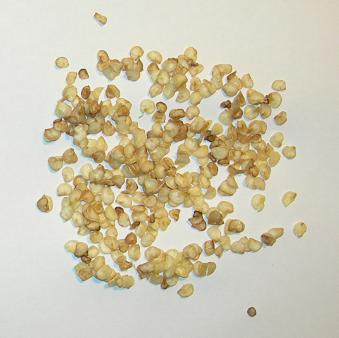
Chili Pepper Seeds
The seeds contain a class of compounds collectively known as Saponins and Sapogenins. These compounds have either a tetra-cyclic (4-rings) or a penta-cyclic (5-rings) triterpenoid skeleton. Conventional steroids (corticosteroids) prescribed for eczema are all tetra-cyclic (4-rings) triterpenoids. Some penta-cyclic triterpenoids such as Oleanolic acid, Moronic acid, Betulinic acid and its derivative Bevirimat have demonstrated anti-retroviral properties by acting as HIV maturation inhibitors. The active drug in the seeds is of this type.
I have experimented on as many varieties as I could and can confirm that the seeds of all chilies including sweet chilies exhibit the desired effect once cold treated. To reiterate, it has NOTHING to do with capsaicin, the pungent principle responsible for the hot or spicy taste. Although I have confirm the seeds of large sweet peppers, like Bell peppers, to also exhibit the desired effect, the seeds of these peppers are very thick and hard and cannot be chewed easily. If these are used, it is best for them to be blended in a liquid medium to break the seeds open. Also, large sweet peppers do not have many seeds. A typical Bell pepper will have less than half a teaspoon’s worth of seeds, requiring about 3-4 peppers to obtain a heaped teaspoon amount for one day’s dose. It is therefore the least cost effective choice.
By far the most convenient choice of chili and method, is to use large sweet pickled Lombardi chilies. They are common to Turkey, Greece, Italy and Spain. Pickled Lombardi chilies are widely available and cheap to come by. They are mostly of Turkish origin and available in many supermarkets in the UK. They are almost sweet and very mild with very little and undetectable hot taste to them. As they are pickled they will keep for long periods without going off even after opening when refrigerated; a few months at least. You can eat the pickled chilies if you enjoy them. But it is best to remove the seeds and chew them well to brake-up the seeds. It is best to cut an incision along the length of the chili and scrape out the seeds together with the placenta. It will take up to 5 of the at least 15cm long Lombardi chilies to make up a heaped teaspoon amount of the seeds. Accounting for the volume of the placenta, this would amount to one and a half heaped teaspoons. See the Concise Guide section below.
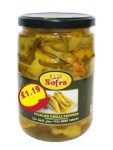

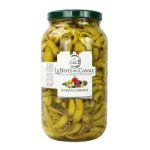
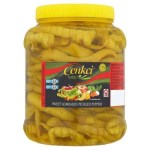

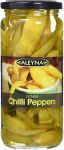
Chewing the seeds on their own rather than the whole chili will be better at breaking up more of the seeds. If you are not a fan of the vinegar taste, the seeds can be placed in a sieve and rinsed under cold running water to remove most of the vinegar. They can then be chewed or blended prior to ingestion. Their seeds are very delicate and can be chewed easily. The pickled jars can be stored for much longer to achieve the highest potency. After 4 weeks storage the seeds would have achieved up to 50% potency, taking up to 8 week to reach full potency. Storage for 4 to 5 weeks in the refrigerator would give good results. I cleared my moderate eczema symptoms in 7 days by taking about a heaped teaspoon (seed content of 4 chilies) of the Lombardi seeds once a day, which had been in the refrigerator for 4 weeks when I started.
The amount of seeds that need to be taken to have the desired effect (ie: to fall within the therapeutic window) is about 500 of the active seeds once a day for mild to moderate symptoms and 500 seeds twice per day for severe symptoms. An average sized heaped teaspoon of the seeds equates to approximately 500 seeds. For larger sweet peppers, like Bell peppers, the seeds are larger and require less in number to make up a heaped teaspoon. I do not recommend the seeds of larger sweet peppers as they are very thick and hard to chew. Even using a blender fails to break them up properly.
The number of seeds per thin chili depends on their size. A small 2 cm long thin chili could have as little as about 20 seeds while a 10 cm long thin chili could contain in excess of 120 seeds.
Lombardi chilies are wider and much longer at up to about 20 cm long. Typically a picked jar of Lombardi peppers also contain smaller chilies as short as about 10cm long. The smaller/shorter Lombardi chilies can contain as few as about 50 seeds, while the longer ones can contain about 130 seeds. Their seeds are quite delicate and can easily be chewed.
You should see significant improvement in your eczema symptoms within 1 week.
I do not know how long it will take for it to show significant improvement of HIV/AIDS symptoms, but as an intelligent guess would imagine this to take about 4 weeks. If you have HIV do not stop taking any medication that you are already prescribed for it.
If you do use the remedy I would be grateful for your feedback.
For a full discussion including data from experiments conducted by Novartis please see the main section below.
I applied for 2 patents. Both are available online. The first was for Eczema and other skin conditions. The second was for other possible indications including HIV/AIDS.
Short Link URL to this page: http://wp.me/P2oZZ5-5x
Concise Guide:
The following is the most convenient, cost effective as well as practical, both in terms of storage and consumption of the seeds of peppers, when using sweet pickled Lombardi peppers. There are also hot pickled peppers, such as hot thin chilies, Guindilla and Frenk peppers and are reflected as being hot on their labels. Lombardi pickles tend to be quite long at around 20 cm for fully grown ones and are crinkled. See Pictures of Chilies page.
- Source and purchase 4 large jars of sweet Lombardi peppers. Large jars range from 500 to 900 grams content per jar.
- Place the jars in the refrigerator. Write the date of start of refrigeration on the jars.
- Leave the jars in the refrigerator for at least 4 week. For best results leave for 4 weeks or longer. As discussed above, the longer you leave them the more potent the seeds become, reaching maximum potency after about 8 weeks.
- After 4 weeks open one jar. Remove 4 to 5 Lombardi peppers for mild to moderate eczema symptoms once a day. For severe symptoms do this twice per day.
- If you have sensitive skin or eczema on your hands wear gloves to prevent discomfort from the vinegar. Lombardi peppers have negligible capsaicin content, undetectable by taste.
- Place peppers on a plate. Cut the head (Calyx) off. Cut an incision along the length of the pepper with a knife. Using a teaspoon, scrape out the seeds together with the placenta to which most of the seeds are attached to. The majority of the seeds are located in the top half of the pepper. Using a plate is better than a chopping board as it will catch the runoff of vinegar in the peppers.
- Collect the seeds, including the placenta, with a teaspoon and chew them well. For 4 to 5 peppers this should equate to about one and a half heaped teaspoon amount.
- Place the jar back in the refrigerator.
- For more potent seeds that have been in the refrigerator for longer than 5 weeks, less amount of the seeds (about a third less) would be needed to achieve the same results, and as much as half the amount for 8 weeks or longer refrigeration.
- You should see significant results after just 3 days of taking the seeds.
- There is no harm to take double the above amounts. You will see greater and quicker improvement in symptoms. It is not recommended to go beyond 4 times these amounts, especially for seeds that have reached maximum potency (8 weeks or longer storage).
- Mild to moderate eczema symptoms will clear in about 7 days. Severe symptoms may take about 14 days.
- Continue taking the seed for a week after your symptoms have disappeared.
- After this point, you can either stop taking the seeds and start again as soon as symptoms appear. Or you can take the seeds once every other day for another 7 to 10 days.
- Following steps 13 and 14 above will result in your eczema taking longer to return and in ever increasing milder form. Once you have cleared your eczema symptoms a few times in a row, your eczema will stop returning. This was my experience.
How I Discovered It:
I have suffered from eczema (aka dermatitis), in its various forms, since childhood. My eczema would be best described as being between mild to moderate depending on various conditions such as food and time of year. I made the chance discovery some years ago when I started consuming fresh thin chili peppers for another medicinal purpose. I had read that Capsaicin, the compound responsible for the pungent or “Hot” taste, could desensitise pain locally and this included the pain caused by stomach ulcer. Suffering with a stomach ulcer, I decided to give it a try. As I was unaccustomed to spicy food, I decided to eat fresh chilies along with my food rather than preparing a spicy meal. That way I could control how much of the spice I was taking and could stop ingestion if the taste became unbearable. I would take a bite of the chili and chew it along with my food. I would always buy a large 300g bag of thin chilies and store them in the refrigerator. As time went by I became more tolerant of the taste and started to consume in excess of 5 thin chilies twice a day with my meals. After a few weeks of starting eating the chilies my eczema gradually disappeared. To see if there was a connection I stopped eating the chilies and waited until my eczema reappeared. Again after a few weeks of eating the chilies my eczema disappeared.
The chili peppers I was consuming were the commonly available, and mostly green, thin chilies. Depending on their size I was consuming between 5 to 10 chilies with each meal. They roughly ranged from about 2 cm to about 10 cm in length and less than 1 cm in thickness. They are known by a wide variety of names. The names on the labels of chili peppers in the United Kingdom include but are not limited to: thin chilies, thin Indian chilies, bird’s eye, African bird’s eye chilies, Thai chilies, finger chilies, rocket chilies, cayenne, etc.
After confirming that the oral consumption of chilies was responsible for clearing my eczema, I was baffled why this benefit of chilies for eczema had not been realised much sooner and was not common knowledge. Especially given chilies and chili products are commonly and regularly consumed in countries like India, Thailand, Central America, etc. I did a search and found many studies concerning Capsaicin, in particular its topical application as an anti-pruritic (anti-itch) and for pain. But there was nothing I could find showing the connection between the oral consumption of Capsaicin or chili peppers and its benefit for eczema.
After briefly researching about chilies, I became aware that their seeds contain a family of compounds collectively known as Saponins and Sapogenins. Saponins generally have either a four-ring (steroidal) or a five-ring triterpenoid skeleton based structure and also include a sugar moiety. They are derived from triterpenes. Without the sugar moiety they are called Sapogenins. Synthetic steroids and corticosteroids were originally derived from Diosgenin, a Sapogenin of Wild Mexican Yam. The four-ring steroids are also referred to as triterpenoids. The four-ring and five-ring triterpenoids are referred to as tetracyclic and pentacyclic triterpenoids respectively. For sake of clarity I will refer to tetracyclic triterpenoids (4-ring C27 skeleton) as steroids.
To confirm that the active ingredient drug was present in the seeds and to also eliminate Capsaicin, I separated the seeds from the rest of the fruit. I did this to a large amount of chilies. Depending on the size of the thin chilies, the number of seed per fruit ranged from as little as about 20 seeds in a small one to in excess of 120 seeds in the long ones.
I repeatedly washed the seeds with hot to the touch water to remove the majority of the Capsaicin. Capsaicin is present on the surface of the seeds but not inside. Capsaicin is produced in the white placenta inside the chili. Although Capsaicin contaminates the surface of the seeds, it is not present within the seeds. Capsaicin is only sparingly soluble in warm water.
I stored both the seeds and the de-seeded chilies in the refrigerator. Initially I took about 5 de-seeded chilies which were still “hot” per day for about 2 weeks without noticing any benefit. Then I took a teaspoon of the seeds once per day. Within about 2 weeks my eczema symptoms had disappeared. My eczema at this time was mild in severity. I would chew the now almost tasteless seeds with little pungency with my food. This is crucial as the intact seeds will not release any of the drug during digestion.
I was now sure that Capsaicin was not involved. Instead the seeds contained the drug.
I was still baffled as to why no one had realised this sooner. I searched the literature to see if there was a correlation with a lower prevalence or severity of eczema in countries where chilies were regularly consumed. I found only one. For copyright reasons I am unable to reproduce a copy. In this short article by Indian dermatologists Kanwar & Dhar the authors report that in their region of practice in Chandigarh, northern India, the prevalence of eczema in young adults is uncommon and in the adult population aged 25 and over it is exceptional. As the title suggests, they have extended their observation to cover the whole of India. I also found a response to this paper by dermatologists Singh & Singh. In this paper the authors state that in their region of practice in Varanasi, central India, the occurrence of eczema in the adult population is quite common. The problem remained as to why there was no further evidence showing correlation with a lower incidence of eczema in the rest of India as well as the many other countries where chilies are commonly consumed.
It would be many years before I finally made the connection. In my view the reason for the observation made in Chandigarh is connected to the climate of the region. In this part of northern India winter lasts about 3 month and temperatures, although remain mainly mild, can fall to temperatures of about 2 to 7 °C, with overnight frost during this period also being common. Whether the chilies are grown locally or transported to the region from elsewhere during winter, this could have resulted in the chilies and their seeds being exposed to cool temperatures for a duration. Together with the eating habits of the region this could have resulted in the drug of the seeds being consumed in some small yet significant amount starting from young adulthood. Over a period of years this would have resulted in a decline in the prevalence of eczema and hence explain an exceptionally lower incidence in adults above age 25 in the Chandigarh region.
Supporting Data from Animal Experiments Conducted by Novartis:
Prior to realising the crucial role of cold temperature treatment, I approached the pharmaceutical industry with the aim of finding a partner to help test and develop the drug of the seeds. One company, Novartis, tested and confirmed anti-inflammatory biological activity. Initially a volunteer eczema sufferer known to Novartis confirmed reduction in her symptoms by taking a teaspoon amount of the seeds once per day for about 6 weeks. This took place during January and February 2004. The seeds of a large amount of thin chilies were initially isolated and treated to remove the Capsaicin. The seeds were then stored in the refrigerator for the duration of the regimen.
After this confirmation I was informed that animal studies would begin shortly. Unfortunately after this point Novartis became less than cooperative and started wasting time and exercised blatant bad science. It later became obvious that my own patent attorneys were colluding with Novartis and helping them to my detriment.
It took over a year for Novartis to perform 3 simple experiments using animal models. The first experiment was negative and showed no anti-inflammatory results. However, the second and third experiments demonstrated significant anti-inflammatory results producing 50% and 42% inhibition respectively. The seeds that produced the 50% inhibition of inflammation had been store in the refrigerator for about 3 month prior to the experiment. The seeds that produced the 42% inhibition had been freeze-dried for 24 hours. Below is a full discussion of the result.
The first experiment was performed in early July 2004. This was called the Irritant Contact Dermatitis (ICD) test that involved the use of mice models. One ear of the mice were treated with an irritant and then given oral administration of crushed seeds. The difference in swelling after a period of time was measured and compared to placebo. Shortly after the experiment was conducted I was told the test had produced positive results. When I finally received the results in September 2004 I learnt that the test had been negative showing no significant results. According to Novartis the start of significance is 28% inhibition of inflammation. Anything less is considered not significant.
The experiment was carried out in Vienna, Austria. I have reproduced the email (Email 1) below:
(For meaning of the units and abbreviations see bottom of this blog)
Email 1:
——————– Start of Email 1 ——————————————-
Dear Ali,
I am now attaching the results in our first standard model, which we call “irritant contact dermatitis ICD”. In a nutshell, mice are sensitized to a phorbolester 3-4 days before the experiment. Then seeds are given 1 hr before one mouse ear is treated with a phorbol ester as irritant for a second time. 6Hr. after challenge the difference in ear swelling is evaluated by different methods.
The message below says in German that this result below was reported in a meeting of July 6, in which I did not participate. Unfortunately it was not sent to me so that I did not know that, contrary to what I had heard before, the seeds were inactive up to 100 mg/kg (this is a lot!). Therefore, these seeds were not tested in a second model. I am sorry for this misunderstanding.
I will get back to you hopefully next week.
Regards
die Ergebnisse aus dem TPA- induziertem ICD-Modell wurde am 6. Juli im”Dienstagsbefund” rapportiert – die “Katastrophe” ist, dass der Befund nicht weiter geleitet wurde ! Eine Prüfung im ACD-Modell haben wir wegen des negativen Resultates aus dem ICD-Modell nicht durchgeführt
ICD-TPA/ Maus, systemische Behandlung, L. Wassermann
# 106-04
Paprikasamen % Inhibition of inflamation
1 x 100 mg/kg po 11 ± 9.4 ns
1 x 50 mg/kg po 7 ± 9.4 ns
1 x 10 mg/kg po 10 ± 9.4 ns
Treatment was performed 1 hr before challenge ! Evaluation 6 hrs after challenge.
——————– End of Email 1 ——————————————-
ns = Not Significant (statistically)
The second experiment was conducted in October 2004. This second model involved exacerbation using an allergen and is called the Allergic Contact Dermatitis (ACD) test.
In this experiment evaluation of reduction in inflammation was evaluated 24 hours after challenge with the allergen, as opposed to 6 hours used in the ICD test. These experiments were also conducted in Vienna. The following is an extract from the email (Email 2):
Email 2:
——————– Start of Email 2 ——————————————-
It turns out that we have now identified a in vivo system in which two preparations of the pepperoni seeds are significantly active. Details later.
Preparation 1: seeds were stirred in 50 oC water for almost a day, dried in vacuo at RT and stored at +4oC for 2 months.
Preparation 2: seeds from red chili bought in the supermarket were treated twice for 5-10 min. in 50oC water and dried as above. Used in experiment immediately after drying.
ACD acute / mouse, systemic treatment, H. Fahrngruber
# 204-04 (25.0 mg !!!) % Inhibition
Chili seed /prep 1 2 x 100 mg/kg po (-24 / 0 hr) 36 ± 7.5**
Chili seed /prep 1 2 x 25 mg/kg po (-24 / 0 hr) 50 ± 5.8**
Chili seed /prep 2 2 x 100 mg/kg po (-24 / 0 hr) 28 ± 7.7*
Chili seed /prep 2 2 x 25 mg/kg po (-24 / 0 hr) 6 ± 9.2ns
——————– End of Email 2 ——————————————-
As the email states, 2 seed samples or preparations were used. “Preparation 1” is from the same batch of seeds used in the initial ICD experiment of July 2004, which had produced no results. As it states in the email, these seeds had been stored in the refrigerator at +4oC for 2 month. The actual period is closer to 3 month (July to October). “Preparation 1” now at 25 mg/kg produces a significant 50% inhibition of inflammation. The very high dose of 100 mg/kg produces a lesser inhibition of 36% and is overdosed. “Preparation 2” is from chilies that were purchase in late September 2004. In this case only at 100 mg/kg is there some inhibition, but at 28 % it is on the borderline of significance. The dose of 100 mg/kg is very high. For a human subject weighing 80 kg, this would equate to 8 grams. This being 8 grams of dried seeds.
After requesting further details about the experimental procedure, I was sent a bit more information in November 2004, reproduced below (Email 3). Strangely it is stated that the seeds were first crushed using a pestle and mortar and then treated with water to remove the Capsaicin! In the previous email (Email 2) it is stated that the seeds used in “Preparation 1” had previously been “stirred in 50 oC water” before being dried and stored in the refrigerator. Therefore the washed and dried seeds that had been stored in the refrigerator since July 2004 were re-washed, after first being crushed! This process could have removed some of the active ingredient. Saponins are soluble in water.
Email 3:
——————– Start of Email 3 ——————————————-
Materials & Methods:
Test article: Seeds from red pepper were minced with a pestle , soaked in an excess of water for 30 min and then centrifuged (4000 rpm/5 min). The pellet was resupended in warm water and centrifuged again and dried over night in high vacuum. The dried pellet was resuspended in water (10 mg/ml), homogenized with a glass homogenisator and administered as a fine suspension by gavage in doses indicated.
Test model: Animals (female NMRI mice) sensitized against oxazolone were challenged on the right ears. Contact hypersensitivity reaction was assesssed by auricular swelling (determined by individual differences in right and left (unchallenges) ears in test- and control (vehicle-treated) animals.
The animals were treated twice, 24 hrs before challenge and at challenge. Evaluation was performed 24 hrs after challenge.
Results:
Difference in auricular weights % Inhibition vs controls
( mg, Mean +/- DS, n= 8 )
Controls: 25.0 (3.1) –
Test group:
2 x 100 mg/kg po 16.1 (4.9) 36%**
2 x 25 mg/kg 12.5 (3.8) 50%***
**: p < 0.01; ***: p < 0.01
*** : p< 0.001 (the above ***: p< 0.01 is incorrect)
——————– End of Email 3 ——————————————-
In December 2004 I met with those concerned at Novartis’ HQ in Basel, Switzerland. It became obvious that Novartis was very interested in the drug of the seeds. They said that it would take them about 6 – 12 month to conduct further feasibility studies, during which time 3 solvent extracts would be attempted (methanol, ethyl acetate and cyclohexane). Essentially they wanted to waste more time so that I would accept any offer they eventually made. This had been their tactic all along. During this meeting it became obvious my Patent Attorneys of the time were colluding with Novartis. This has also been confirmed by the Whistle Blower.
Novartis were therefore well informed of all my circumstances and knew I had no other interested party investigating the seeds and were confidently wasting time, even though they were very interested in the drug of the seeds. In addition they also knew of the significance of cold temperature treatment and hence knew it was unlikely that another partner would be able to conduct any successful experiments showing anti-inflammatory results without this knowledge.
When in late April 2005 I asked for feedback, I was informed that the solvents used had failed to extract the active ingredient and that the activity had remained in the seed residue (see table in declining letter below). I received these results as well as their declining interest in May 2005. By this time all parties concerned knew I had realised there was collusion between them.
The letter states that 65g of seeds were washed 4 times using 50 °C water to remove the Capsaicin. The seeds where then freeze-dried (lyophilised) and ground to a powder. The powder was then “extracted successively” in decreasing lipophilicity starting with cyclohexane, then ethyl acetate and finally methanol. However only the residue, left after the extractions, had shown significant reduction of 42 % at 25 mg/kg in inflammation. And at 100 mg/kg the model was overdosed and even showed inflammation.
It would have been more appropriate to extract using each solvent with a portion of the original powdered seeds rather than doing a “successive extraction” on the same sample. A test of the original powdered freeze-dried seeds not tampered with by any solvent was not performed. Such a test would have provided a better reflection of how active the seeds were and how effective any solvent extraction may have been. Given saponins by their nature and structure are surfactants, it would have been best to start with methanol. There are a great number of scientific literature that discuss saponin extraction using alcohols (methanol or ethanol) or even just plain water. And all this from a giant top ten pharmaceutical company, made even more strange since they knew I hold a chemistry degree!
In the letter the reason Novartis declines interest is not because the seeds did not work but rather because they could not extract the active ingredient using JUST 3 SOLVENTS. Far from being uninterested, Novartis was in fact very interested and had been busy investigating the active ingredient of the seeds.

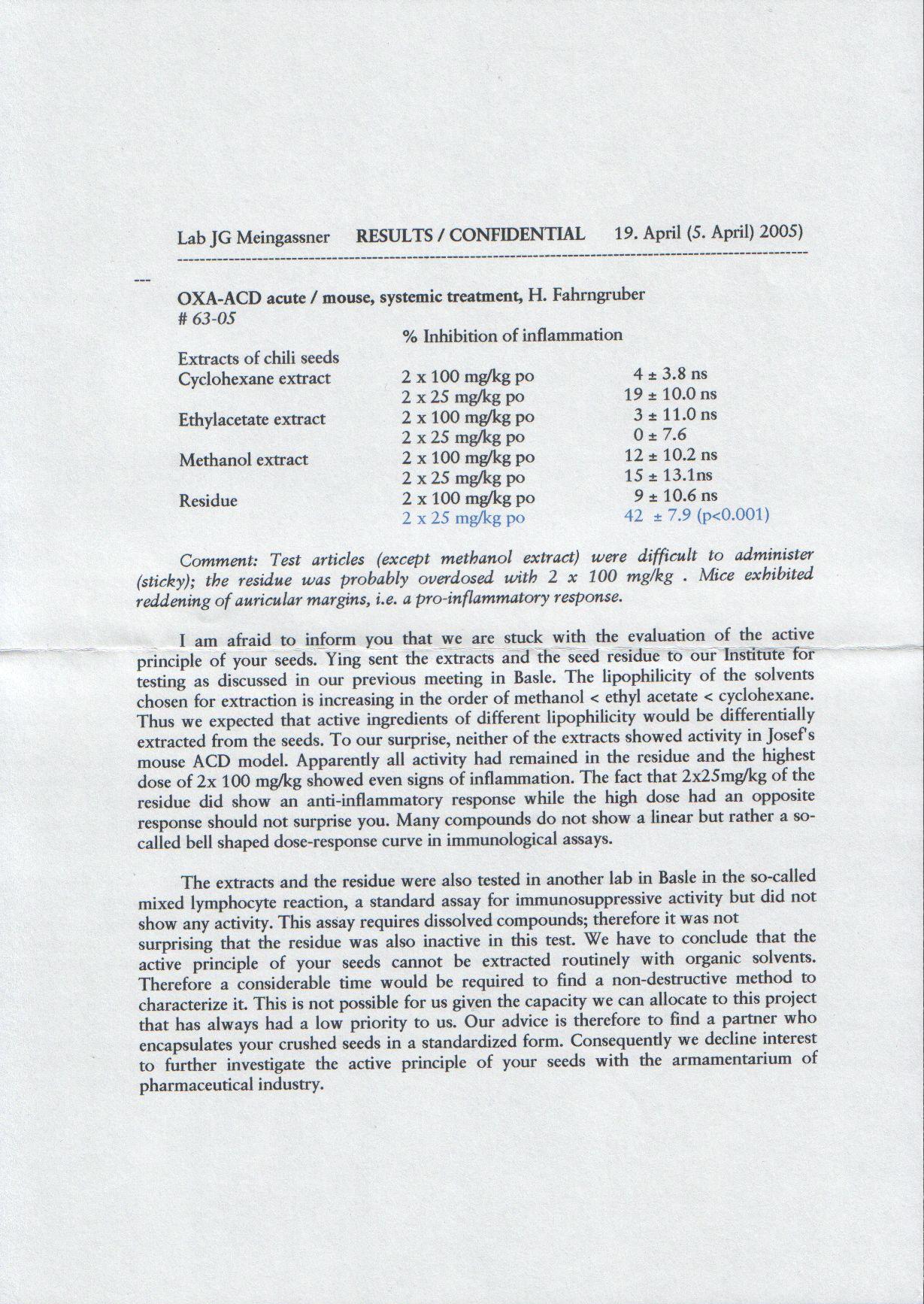
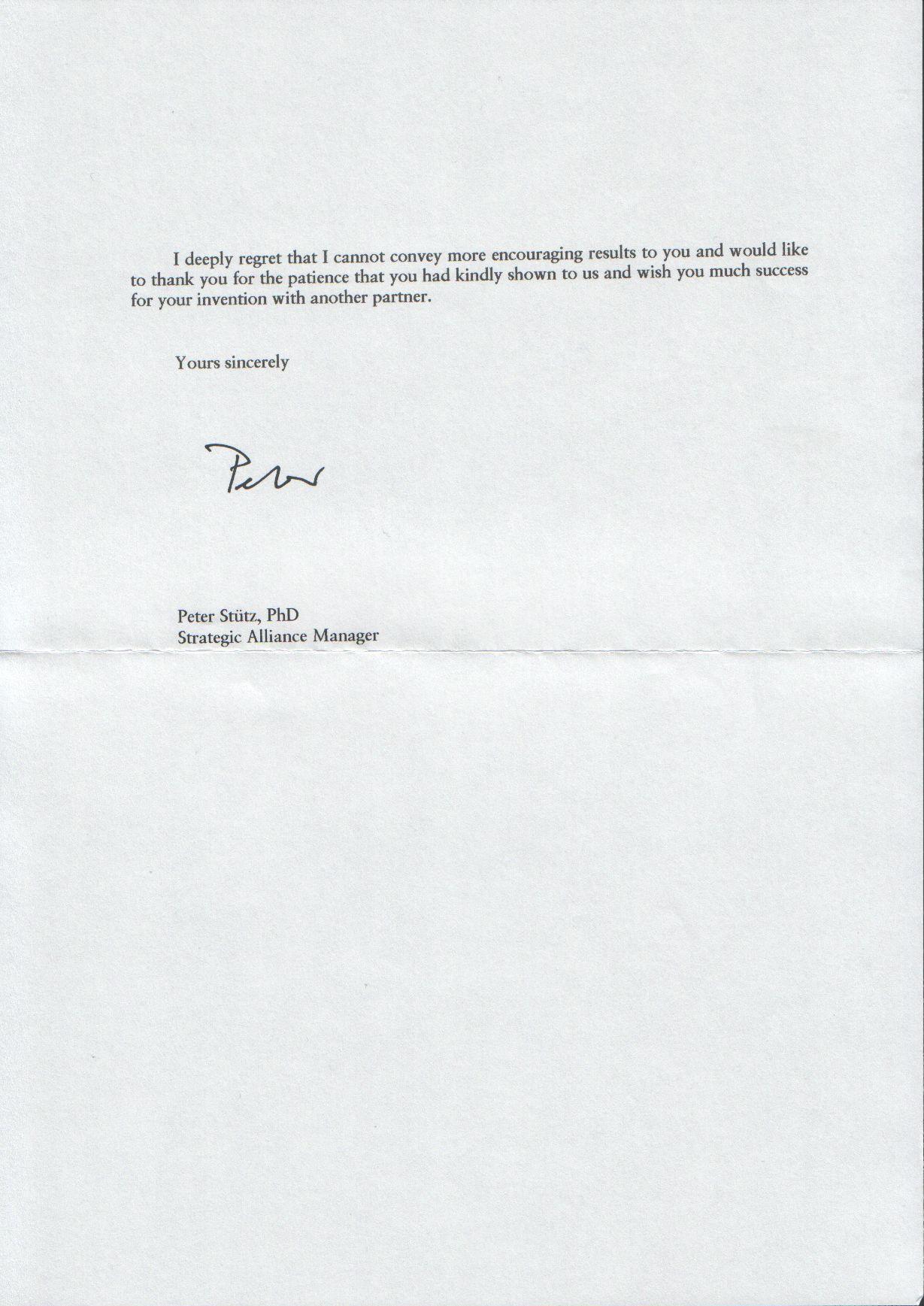
Novartis’ Declining letter containing experimental procedure and results of early April 2005 animal test.
(Click On Images To View Higher Resolution)
It was in 2006 that I finally realised that storage at cool refrigerator temperature is responsible for the gradual accumulation of the drug in the seeds. Since that time I tried finding another pharmaceutical partner. Of the few that replied, all pretty much rejected any interest, some stating that if the discovery was of any value then Novartis would have done something with it. I also got a similar reply from Dermatologists and investigators in the field. The majority did not even reply to me.
Role of Cold Temperature Treatment:
Cold treatment results in the change of a precursor chemical in the seeds into the active ingredient or drug. The rate this takes place at refrigerator temperatures is much slower than if the seeds are frozen or freeze-dried. The reaction is most likely an exothermic reaction and needs to give off heat. Some exothermic reactions only occur if they are cooled and do not occur under normal room temperatures. This is because at room temperature the reverse reaction is favoured, that being an endothermic reaction that absorbs the heat from its surrounding. Therefore the cold treatment favours the reaction to take place by draining the heat from the reaction. Once back at or above room temperature and provided it is a reversible reaction the active ingredient will revert back to the precursor. It is therefore possible that the Active Ingredient is actually the precursor chemical, but its structure prevents it being absorbed by the body. Once it changes its structure due to the cold treatment it is then in an absorbable structure. Once inside the bloodstream and at 37 °C, it reverts back to its original structure.
This is the main reason the medicinal property of the seeds was not realised sooner. Chili peppers are commonly and regularly consumed in regions of the world where the warm climate favours their growth throughout the year, for e.g.: India, Mexico, Thailand, Indonesia, etc. Also some varieties used have very high pungency, like the Bird Eye and Scotch Bonnet, and therefore small amounts are required to produce the desired taste.
The experiments conducted by Novartis confirms the role of cold treatment. As discussed in the previous section only the seeds of Preparation 1 that had been stored in the refrigerator for about 3 month and used in the second ACD experiment produced 50% inhibition of inflammation at 25 mg/kg. The same seeds at the very high dose 100mg/kg was overdosed and only produced 36% inhibition.
Preparation 2 used seeds from fresh chilies that were purchased from a supermarket during mid September 2004. However Preparation 2 shows only a 28% reduction at the very high dose of 100 mg/kg. This being on the borderline of significance. According to Novartis this is 28%. Given the seeds of Preparation 2 was sourced from a supermarket in Austria in September, could also explain why at only the very high dose of 100 mg/kg a less significant 28% reduction in inflammation was achieved. It is quite possible that these chilies, that were most likely imported, had been exposed to the cold climate of the region during transport and storage prior to reaching the market. In addition the chilies may have been stored in the refrigerator by Novartis for a few days before being used in the experiment in October. This period could have allowed for the accumulation of the active ingredient, albeit in very small quantities.
The seeds of the chilies used for the third and final ACD experiment of April 2005 were freeze-dried (Lyophilized). This freeze-drying process would have made the seeds very potent. Hence the seeds could have been so potent that even at 25 mg/kg the models were overdosed and therefore showed 42 % reduction and not higher. Likewise at 100mg/kg it was overdosed so much as to produce inflammation!
The paper by Kanwar and Dhar, that reports a lower incidence of eczema in Chandigarh, India, seems to also confirm the role of temperature. Chandigarh is located in northern India. During winter the temperature in this region can fall to about 2 to 7 °C with overnight frost being common. Whether the chilies that are used in the region are grown locally or transported from warmer climates, the seeds could experience enough exposure to cool temperatures or overnight frost to result in the active ingredient to accumulate to some extent. And this together with the eating habits of the region could be the combination that has resulted in eczema being uncommon in the adult population of the region.
For HIV/AIDS:
Some time ago I was contacted by a “Whistle Blower”. They informed the drug of the seeds has very potent anti-retroviral efficacy against HIV. It is also effective against resistant strains of HIV. It reduces HIV to undetectable levels. Most importantly HIV is unable to become resistant to the drug. Novartis has known about the effectiveness of the drug for HIV/AIDS for a long time. As mentioned above, the Whistle Blower also confirmed my patent attorneys of the time had colluded with Novartis, just as I had come to realise.
Based on the information from the Whistle Blower, I subsequently submitted a second patent application in 2009.
For more information supporting the disclosure by the Whistle Blower, please see the “For HIV/AIDS” page
Preparing The Seeds:
The best option is to use seeds from sweet peppers. Large sweet peppers, like Bell peppers, are not recommended as their seeds are very thick and difficult to chew. These peppers will also be more costly given the price per pepper, compared to sweet Lombardi peppers.
The easiest and most convenient option for both preparing and consuming the seeds is if you use the pickled sweet Lombardi peppers. They have very little to no detectable hot taste. As they are pickled, they will keep for very long periods, compared to fresh chilies that will start to dry out or become spoiled after 4 weeks.
For a concise step by step guide, see the Concise Guide section above.
The longer you leave the pickled Lombardi peppers refrigerated, the more potent they become. Leaving them for about 8 weeks will result in the majority of the precursor to convert to the active ingredient and therefore reach maximum potency. It is best to cut open these chilies and isolate their seeds. Chewing the seeds on their own will result in the majority of the seeds being broken open. When eating the whole chilies, far less of the seeds are crushed open than when the seeds are chewed on their own. Most of the seeds are in the top half of these chilies and attached to the placenta. You can cut off the top of the chili (Calyx) then cut an incision along the length of the chili. Using a teaspoon scrape the seeds and placenta out. If you are not keen on the vinegar taste, you can place them in a sieve and rinse them to remove most of the vinegar before chewing them or blending the seeds in a liquid medium. Their seeds are very delicate and can be easily chewed.
Buy at least 4 jars of the pickled Lombardi peppers and place them in your refrigerator for at least 4 weeks prior to use. Write the date you placed them in the fridge on the jar. The seed content of each chili varies from as little as 50 seeds for a 10 cm long one to about 130 seeds for a long one. On average they contain about 120 seeds. For mild to moderate eczema symptoms start by eating the seeds of about 5 of the chilies once per day. For moderate to severe eczema, consume the same amount twice per day. You can also use a heaped teaspoon amount as a way of standardising the amount to take. Chilies that have been in the fridge for 8 weeks or longer would require as much as half the amount to achieve the same results. Taking the same amount of the more potent seeds will not pose any problems and will clear eczema symptoms faster. It is best not to take too much of the seeds and substantially beyond (4 times as much) the above amounts as too much of any drug can have adverse results. I cannot emphasise chewing the seeds enough, as this is essential to break the seed lining open, without which the drug will not be released.
If you cannot obtain sweet Lombardi or similar chilies for any reason you can isolate seeds from hot varieties and treat them to remove the capsaicin. However, this method is not recommended. It is a very laborious task and you must absolutely wear gloves, eye protection and a mask. You can do the following:
Isolate the seeds from a large amount of thin chilies (eg: 300 grams).
Capsaicin, the chemical responsible for the “hot” taste, is an irritant to the skin, nose and eyes. You MUST wear gloves, mask and eye protection when handling the chilies. Work in a well ventilated are.
Capsaicin is produced and present in the white placenta inside the chili to which the seeds are attached. Although the Capsaicin contaminates the surface of the seeds, it is not present inside the seeds. Capsaicin is very soluble in solvents like ethanol and acetone (nail varnish remover). Place the isolated seeds in a suitable container together with 2 to 3 times of the appropriate solvent and stir for a minute. This will dissolve all the Capsaicin.
The cheapest and most readily available solvent is acetone (nail varnish remover). Pure acetone is available from Amazon. Please note both ethanol and acetone are highly flammable. Work in a well ventilated area and away from any flame. If you use acetone do not use anything plastic as acetone attacks certain plastics. Use only glass and metal containers and sieves.
Place the solvent treated seeds in a sieve and wash clean of the solvent by holding under running tap water. Both ethanol and acetone are miscible with water and can be washed away. Taste a few of the washed seeds to make sure they no longer taste spicy.
Place the seeds in a suitable container and place in your freezer for at least 14 days. To make sure most of the precursor chemical has been converted to the drug, freeze them for 4 to 5 weeks. Keep the seeds in the freezer for the duration of the regimen, only removing the required amount.
Depending on the severity of your condition start taking between 250 to 500 seeds once or twice per day. A heaped teaspoon equates to approximately 500 seeds.
It is crucial for the seeds to be crushed open before ingestion. Place the appropriate amount together with a liquid medium. You can use water, yoghurt, milkshake or any other beverage and blend for a few minutes. To ensure maximum absorption take the resulting mixture during or after your meal.
Dose:
The following about dosages are estimates and provided as a guide. Because I only had my self to test on when I had eczema I cannot provide accurate dosages.
The dose or amount of seeds that need to be taken depends on the potency of the seeds, severity of your condition, your size and age. If your eczema is mild to moderate then I would recommend 1 heaped teaspoon full of the cold treated seeds once per day.
If your eczema symptoms are quite severe start by taking 1 heaped teaspoon full of the seeds twice per day or 2 heaped teaspoons once per day. For mild to moderate symptoms you can take half the aforementioned amounts. Once you have seen significant improvement reduce the dose by up to half. A heaped teaspoon equates to approximately 500 seeds.
When using seeds removed from sweet pickled Lombardi peppers and removing the placenta of the pepper along with the seeds attached to it, the placenta will add to the volume and therefore instead of 1 heaped spoon it will take about one and half teaspoons, and instead of 2 heaped teaspoon it will take 3 heaped teaspoons.
To get good results the seeds need to have been in the refrigerator for 4 weeks or longer. At 8 weeks storage, the seeds would have achieve full potency, requiring less in amount, by as much as half the above mentioned dosage.
I have overdosed on the seeds by taking about 4 heaped teaspoons per day without noticing any side effects. All that will happen is that you symptoms will disappear sooner.
For best results keep taking the seeds for at least 1 week after your symptoms have disappeared. As soon as your eczema returns, start taking the seeds and again continue for 1 week after they have disappeared. You will find your eczema takes longer to return and in ever milder form until it eventually stops. That was my experience. It seems to fix the underlying chemistry that causes flare-ups.
If you have HIV/AIDS, again depending on how advanced your symptoms are, I suggest taking 1 heaped teaspoon full of the seeds twice per day.
I do not recommend seeds of large sweet peppers, like Bell pepper. Their seeds are very thick and hard to chew. Also, they have fewer seeds per fruit, and therefore require many to be purchased, costing far more.
Saponins & Sapogenins:
Saponins are related to the tetracyclic (4-ring system) steroid and pentacyclic (5-ring system) triterpenoid structures and include a sugar component. Without a sugar component they are called Sapogenins. Both the 4-ring and 5-ring structures are referred to as triterpenoids. For the sake of clarity I have referred to them as steroid and triterpenoid respectively.
Saponins and sapogenins are widespread in the plant kingdom and are abundant in fruits and vegetables. Very few have biological activity in humans and even then are usually of low potency. An example of a 5-ring triterpenoid sapogenin is Betulinic Acid. In some cases they are toxic at high concentrations. The majority are not absorbed.
Some penta-cyclic triterpenoids such as Betulinic acid and Oleanolic acid have demonstrated anti-retroviral properties. The active drug in the seeds of the chilies is of this type.
Most of the conventional corticosteroids that are prescribed for eczema, commonly in the form of topical creams, ointments and systemic drugs, are synthetic derivatives of naturally occurring steroids. Initially synthetic steroids were derived from wild Mexican Yam. However these synthetic derivatives, although more potent and therefore more effective for their purpose, do have some serious side effects when taken long-term.
Saponins given their structure have surfactant properties. The terms saponin and soap are interrelated. Parts of various plants that contain saponins have been used historically for their soap properties (see link for examples of soap plants).
Cholesterol is a steroid alcohol. Steroid alcohols are called Sterols. Some saponins or sapogenins because of their closely related structure mimic cholesterol and in doing so compete with and hinder the absorption via active transport resulting in less cholesterol being absorbed. The branded butter spreads Benecol and Flora Pro-Activ contain such similar chemicals known as stanol esters, which are derived from plant sterols.
Safety:
Humans have consumed chili peppers for thousands of years and they are considered to be safe. The active ingredient present in the chilies has therefore also been consumed, albeit in small quantities. I used the seeds for treating my eczema for many years without ever experiencing any side effects. On a few occasions I consumed large quantities (about 10 or more chilies) twice a day for a few month to see if I experience any side effects. Not only did I not experience any side effects after doing this, instead it took about a year before I was able to exacerbate my eczema to reappear and only then in a very mild form. Until recently I had been free from eczema for over 9 years.
Capsicum peppers fall under the USA FDA’s Generally Recognised As Safe (GRAS) category.
The drug of the seeds is not like other conventional corticosteroid treatments typically prescribed for eczema that suffer from resistance and require increasingly greater amounts or more potent concentrations to have the desired effect. Instead it seems to almost act as a cure when taken long term. And that has been my own exact experience. Almost from the start of making the discovery, I had to increasingly struggle to aggravate my eczema to come back. No matter how much I tried in recent years, I was unable to make my eczema come back any more. It was finally relatively recently that I managed to accidentally aggravate my eczema to return.
As with any new chemical entity that has biological activity, rigorous scientific testing is ultimately required to establish its safety beyond doubt. For this reason I would not recommend this treatment to be used by young children unless necessary. In this regard it should be noted that for children under the age of 12 a dose of below 1/2 of that for an adult should be considered.
It is vital that if you intend on handling the hot variety of chilies and separating the seeds, YOU MUST WEAR GLOVES, A MASK AND EYE PROTECTION. If you want to re-use the gloves, you can repeatedly wash the gloves with hot water and soap to remove most of the Capsaicin prior to removing the glove from your hands. For obvious reasons, I DO NOT recommend this method.
Capsaicin is an irritant. It can cause a type of hand contact eczema known as Hunan Hand Syndrome. Those who handle large amounts of chilies, spices and other irritants as part of their occupation usually suffer this type of eczema, even without ever having suffered from eczema before.
About Chili Peppers (Capsicum):
Chili peppers (also spelled Chilli or Chile) belong to the genus Capsicum. There are over 20 species of Capsicum as well as many hybrids. Their taxa or correct classification depends on various factors, which include the size, shape, colour and pungency of the pepper fruit, plant characteristics as well as the location where they are cultivated. For this reason, and even some experts agree, Capsicum terminology is confusing. There are 5 main species of Capsicum that are cultivated. These are C. annuum, C. baccatum, C. chinense, C. frutescens, and C. pubescens. Of these C. annuum and C. frutescens are the most widespread cultivars. The Capsicum species were indigenous only to the continent of America and were spread around the world after the discovery of the continent by Columbus.
Capsicum belongs to the Nightshade (Solanaceae) family of plants. Some members of the Nightshade family are associated with aggravating eczema as well as some other conditions. I can confirm this myself. I had identified the flesh of sweet Bell peppers to trigger my eczema. Tomato also belongs to the Nightshade family. I had since childhood identified tomatoes and tomato products such as ketchup to cause my eczema to flare-up.
Different varieties of chilies have different levels of Capsaicin, hence requiring far less chili amounts when using very pungent ones. One of the ways the Capsaicin content or “hotness” is estimated is by Scoville Units (SU). The scale is between zero for no Capsaicin to about 16 million for pure Capsaicin. It loosely represents the number of dilutions with sugar water that are required to make the Capsaicin content almost undetectable by taste. The hottest chilies I tried were probably at the most about 300,000 SU. Most were more typically about 30,000 to 100,000 SU. Some varieties frequently used in certain regions have pungencies over 300,000 SU. For example the Prik Kee Noo chili widely used in Thai cuisine is quite small and has very high pungency. The Habanero and Scotch Bonnet, also of very high pungency rating, are frequently used in various parts of the world. Therefore the high level of pungency used in different regions does not necessarily reflect a higher amount of seeds being consumed. It is also not uncommon for the seeds to be removed and discarded.
Lombardi chilies are rated as having 0-500 SU. 500 SU is very low and is barely detectable by taste.
About Me:
My name is Ali Rezai-Fard (aka: Alex Rezai). I live in Surrey near London in the United Kingdom. I have an academic background in chemistry. In recent years I have worked in the IT sector.
I applied for 2 patents. The first for eczema and other skin conditions and the second for other potential indications that includes HIV/AIDS. Both are available on-line at the following links:
1) COMPOSITION CONTAINING CAPSICUM FOR TREATING A SKIN DISORDER
2) THERAPEUTIC USES FOR PLANTS OF THE CAPSICUM GENUS
If you have any questions please write to me at the following email: alexrezai@outlook.com
Last Remark:
If you use the remedy I would be grateful for your feedback. Please note the type of chilies you used, what the local name is, how much you took and how long it took for you to notice results.
Please leave your feedback on the Feedback page.
You can contact me at the following email address: alexrezai@outlook.com
Definitions of Abbreviations:
ns = not significant (statistically)
asterisk (*) = short way of expressing significance of p-value; the lower the value the more significant it becomes. Essentially the reciprocal of the p-value reflects the chance of the result being wrong:
* = p<0.05 of some significance – ie: 1 in 20 chance it is wrong
** = p<0.01 significant – 1 in 100 chance it is wrong
*** = p<0.001 very significant – 1 in 1000 chance it is wrong
mg/kg = milligrams of drug per kilogram of body weight of subject.
po = by mouth
n = number of test animals per group
DS = Standard Deviation
 Natural Product Drug For HIV/AIDS And Eczema